

Choosing the right English enrichment for kids means understanding what actually happens during those precious learning hours. Many parents wonder whether their investment translates into real progress. Let’s walk through a typical lesson to show you exactly how quality programmes build strong language skills.
The Welcome and Warm-Up
A good class begins the moment children step through the door. Teachers greet students by name and create a friendly atmosphere. This sets the tone for confident participation.
The first five minutes involve a quick warm-up activity. Children might share weekend stories or play a word game. This eases them into using English naturally. It also helps teachers gauge each child’s mood and readiness to learn.
Building Vocabulary Through Context
Rather than memorising lists, children learn new words through stories and activities. The teacher introduces a theme, perhaps animals or food. New vocabulary emerges naturally within this context.
For example, a lesson about the jungle might introduce words like canopy, humid, or camouflage. Children see pictures, hear the words used in sentences, and practise saying them aloud. This multi-sensory approach helps words stick in young minds.
The teacher checks understanding by asking questions. “Can you spot something green that’s camouflaged?” This keeps children engaged and thinking actively.
Reading Together
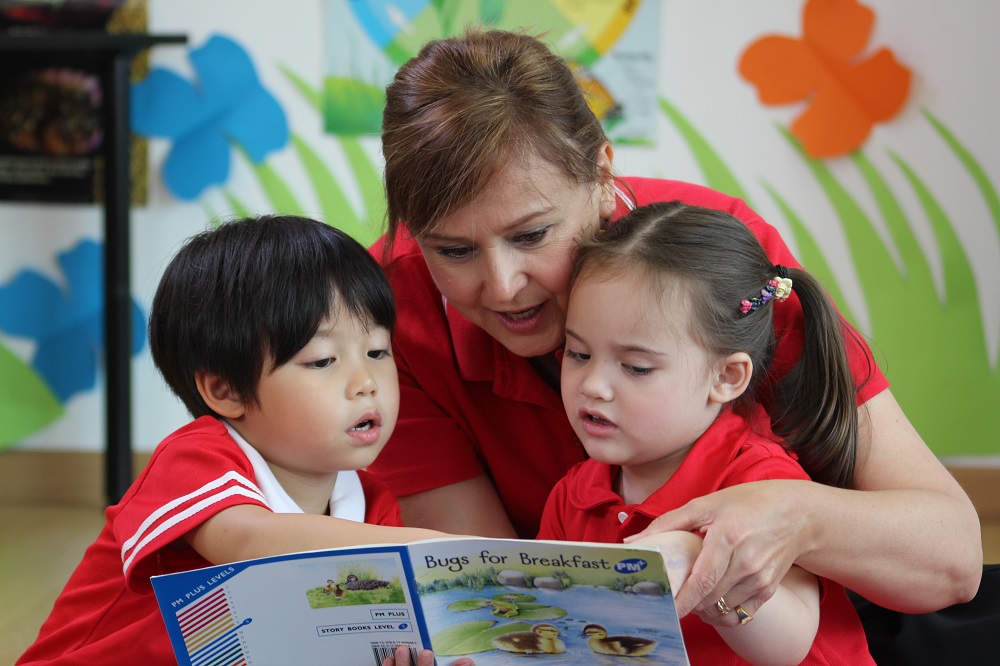
Reading forms the heart of effective English enrichment for kids. Teachers select age-appropriate texts that match current themes. Younger children might enjoy picture books whilst older ones tackle short chapters.
The class reads together, with the teacher pausing to explain tricky phrases. Children take turns reading aloud. This builds confidence and improves pronunciation. Teachers model good expression and fluency.
After reading, discussion begins. What did the character feel? Why did that happen? These questions develop comprehension skills. Children learn to think beyond the words on the page.
Grammar Without the Grind
Grammar lessons work best when children don’t realise they’re learning rules. A skilled teacher weaves grammar into natural activities.
Perhaps the story used lots of past tense verbs. The teacher highlights these during reading. “Notice how the writer said ‘walked’ and ‘jumped’ because it already happened.” Children then practise using past tense in their own sentences about yesterday’s activities.
This approach makes grammar feel relevant rather than abstract. Children understand why rules matter for clear communication.
Creative Writing and Expression
Quality English enrichment programmes always include writing practice. Children might continue the story they read or create something entirely new. The writing task connects to vocabulary and grammar learned earlier.
Younger students might write three sentences about their favourite animal. Older children could craft a diary entry from a character’s perspective. Teachers circulate, offering gentle guidance and encouragement.
This section shows children that English is a tool for expressing their own ideas. It’s not just about getting answers right.
Speaking Activities and Games
Language comes alive through conversation. Teachers structure activities that require children to talk with partners or small groups.
A describing game might have one child explain an object whilst others guess what it is. Role-play activities let children practise real-world situations like ordering food or asking directions.
These exercises build fluency and confidence. Children stop translating in their heads and start thinking directly in English.
Review and Reflection
The final minutes focus on reviewing what was learned. The teacher asks children to recall new vocabulary or share their favourite activity. This reinforcement helps cement learning.
Some programmes send home a simple summary sheet. Parents can see what their child covered and continue practice at home.
What Parents Should Notice
After a few weeks of English enrichment for kids, you should see changes. Your child might use new words at home or show more confidence reading English books. They may ask fewer questions about homework because they understand better.
Progress happens gradually. A structured lesson flow ensures every session builds on the last. Children develop skills systematically rather than jumping randomly between topics.
The right programme balances structure with fun. Children should leave each class feeling accomplished, not exhausted. When lessons flow naturally from one activity to the next, learning feels effortless.
Understanding this lesson structure helps you evaluate programmes properly. You can ask specific questions about how time is spent and what methods teachers use. Your child deserves English enrichment that truly enriches their language abilities.